
Healthcare AI Governance
The Governance-Centred Healthcare Transformation Framework for Institutional Leadership, Workforce Readiness, Patient-Centred Accountability, and Health-System Resilience
Open Access Executive Reference Publication – Licensed under CC BY-NC-ND 4.0
Executive Edition – Version 2.0 | 8 June 2026
By Dr. Samer Al-Diri
Author ORCID iD: 0009-0004-1908-0714 | https://orcid.org/0009-0004-1908-0714
Preprint and citation record: This work is also available as a public ResearchGate preprint with DOI: https://doi.org/10.13140/RG.2.2.13405.99041
Ophthalmology & Retina | Healthcare Management & Transformation | Public Health | Healthcare AI Governance
Related flagship publication: These governance principles are also highly relevant to ophthalmology, where artificial intelligence is increasingly shaping diabetic retinopathy screening, childhood vision-screening pathways, AMD monitoring, retinal imaging workflows, and sustainable eye-care delivery.
Website: https://drsameraldiri.com
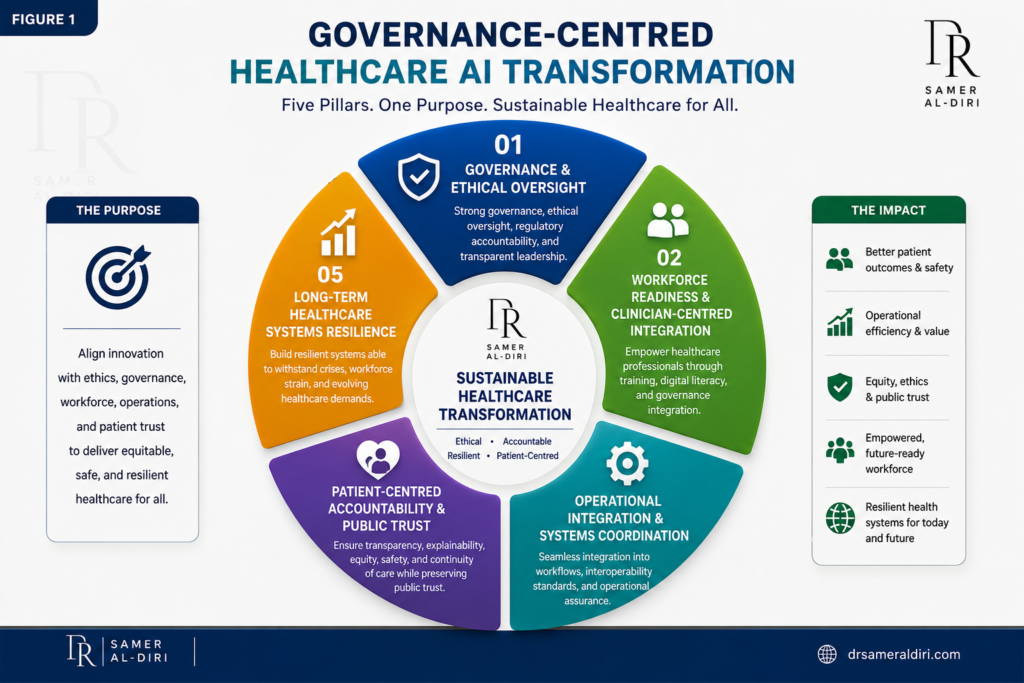
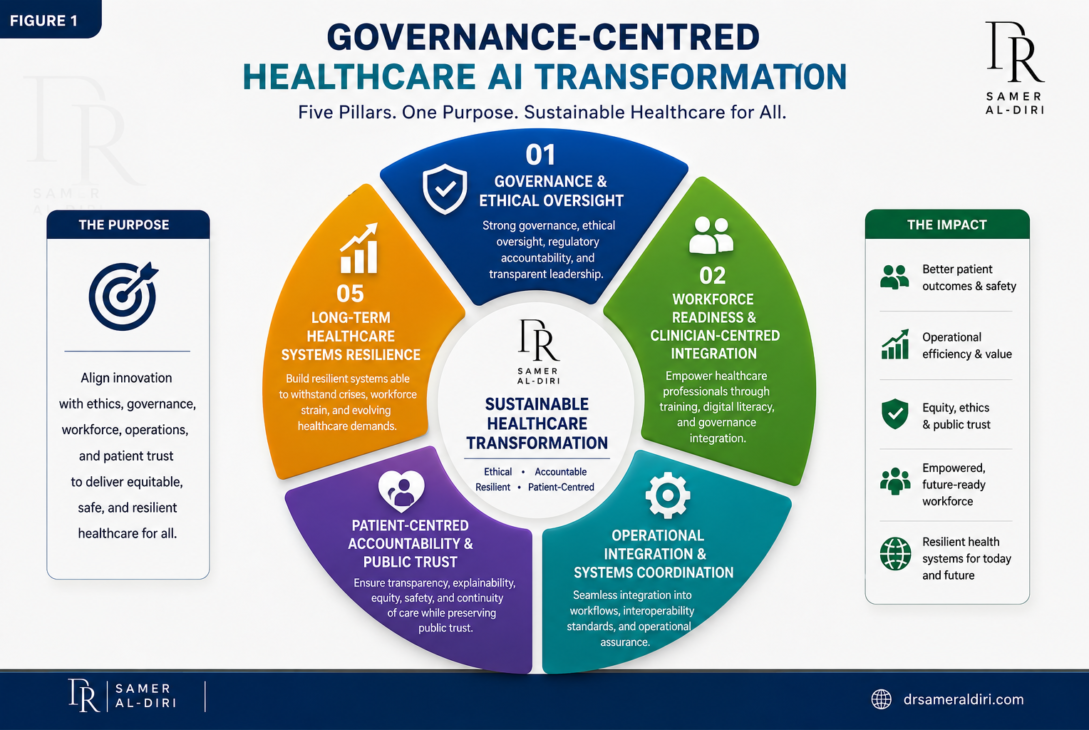
Figure 1. Executive summary infographic – governance-centred healthcare AI transformation.
Framework summary
The Governance-Centred Healthcare AI Transformation Framework presents sustainable healthcare AI transformation as a governance, workforce, safety, accountability, and health-system resilience challenge rather than a technology-only implementation project. The framework connects one purpose — safe, accountable, equitable, and patient-centred healthcare for all — with five operational pillars that determine whether AI adoption becomes clinically useful, ethically governed, and sustainable.
Framework components:
- Governance and ethical oversight: Establishes leadership accountability, ethical review, transparency, risk management, and clear decision-making structures for healthcare AI.
- Workforce readiness and clinician-centred integration: Ensures that clinicians, managers, and operational teams are prepared to use AI safely through training, workflow alignment, and professional engagement.
- Operational integration and systems coordination: Embeds AI into real healthcare pathways, data systems, referral processes, quality improvement, and service-delivery workflows.
- Patient-centred accountability and public trust: Protects patients through explainability, consent awareness, equity, safety monitoring, communication, and public confidence.
- Long-term healthcare systems resilience: Positions AI as part of sustainable healthcare transformation, supporting continuity, adaptability, efficiency, and resilience across changing health-system pressures.
In this framework, successful healthcare AI transformation is measured not by algorithm performance alone, but by whether governance, workforce readiness, clinical integration, patient safeguards, and system resilience improve real-world healthcare delivery.
Executive Abstract
Healthcare systems worldwide are entering a transformational period shaped by artificial intelligence (AI), workforce pressures, operational complexity, demographic change, public health instability, and increasing patient expectations. Yet sustainable healthcare transformation cannot be achieved through technology alone.
This executive edition introduces an expanded Governance-Centred Healthcare Transformation Framework for responsible healthcare AI implementation. The framework proposes that AI should function as an enabling layer within broader healthcare transformation strategies, not as the transformation strategy itself. This perspective is further developed in the related resilient health systems framework, which addresses governance, workforce readiness and digital transformation as core management capabilities for sustainable service delivery.
The article sets out five interconnected pillars for sustainable healthcare AI governance: governance and ethical oversight, workforce readiness and clinician-centred integration, operational integration and systems coordination, patient-centred accountability and public trust, and long-term health-system resilience.
This revised edition integrates five additional executive-level components: a global governance landscape, board and executive leadership responsibilities, a Healthcare AI Governance Maturity Model, a governance KPI dashboard, and an executive policy brief for health-system leaders and policymakers.
The central message is clear: governance is not a barrier to innovation. Governance is what enables healthcare AI to remain safe, equitable, scalable, trusted, clinically responsible, and sustainable.
Key Messages
- Healthcare AI should be governed as a strategic health-system transformation capability, not merely as a technical or procurement decision.
- Human accountability, patient transparency, workforce readiness, and operational resilience should be treated as non-negotiable safeguards for AI-enabled healthcare.
- Healthcare boards and executive teams require explicit oversight responsibilities for AI risk, safety, ethics, workforce preparation, and public accountability.
- Mature healthcare AI governance requires measurable performance indicators, continuous monitoring, algorithmic audit pathways, and transparent accountability structures.
- The highest-performing health systems will be those that integrate innovation with governance maturity, clinician engagement, patient-centred care, and long-term systems resilience.
List of Figures and Tables
- Figure 1. Governance-Centred Healthcare AI Transformation: Executive Summary
- Figure 2. Governance-Centred Healthcare Transformation Framework
- Figure 3. Three Non-Negotiable Governance Red Lines for Healthcare AI
- Figure 4. Healthcare AI Governance – End-to-End Implementation Pathway
- Table 1. Healthcare AI Governance Maturity Model
- Table 2. Board and Executive Leadership Responsibilities
- Table 3. Governance KPI Dashboard for Responsible Healthcare AI
1. Introduction
Healthcare systems are entering one of the most operationally complex and strategically consequential periods in modern healthcare history. Rapid advances in artificial intelligence, rising healthcare expenditure, escalating workforce shortages, demographic change, humanitarian instability, chronic disease burden, and increasing patient expectations are collectively reshaping the future of healthcare delivery.
Governance in healthcare AI is the systematic alignment of institutional oversight, ethical accountability, operational control, workforce readiness, patient-centred transparency, regulatory awareness, and continuous performance monitoring. It is not merely compliance, risk management, or technology approval.
Healthcare leaders must recognise that the future of healthcare transformation will be determined not only by technological innovation itself, but by how responsibly organisations govern implementation, operational integration, workforce adaptation, safety, equity, and long-term public trust.
Sustainable healthcare transformation succeeds when governance maturity, institutional leadership, workforce readiness, operational resilience, ethical accountability, and patient-centred systems evolve together within coordinated healthcare ecosystems.
2. The Global Shift from Digital Adoption to Governance-Centred Transformation
For more than a decade, healthcare innovation discussions largely focused on digital adoption: electronic health records, predictive analytics, automation, cloud-based systems, virtual care, and AI-assisted diagnostics. However, global health systems increasingly recognise that digital adoption alone does not guarantee sustainable healthcare transformation.
In many healthcare environments, fragmented implementation strategies have contributed to clinician burnout, workflow disruption, digital fatigue, interoperability failure, administrative overload, equity gaps, and operational complexity. This has shifted the strategic focus from technology adoption to governance-centred transformation.
Healthcare transformation is therefore no longer primarily a technology discussion. It is a governance challenge, a healthcare management challenge, a workforce adaptation challenge, an operational integration challenge, and a systems leadership challenge.
3. Global Governance Landscape for Healthcare AI
Healthcare AI governance is increasingly shaped by a global regulatory and ethical landscape that is developing across international organisations, national regulators, health-system authorities, and professional bodies. While approaches differ between jurisdictions, the direction of travel is consistent: healthcare AI requires risk-based governance, human oversight, transparency, accountability, safety monitoring, data protection, and equity safeguards.
The World Health Organization has emphasised that AI for health should be guided by ethical principles including human autonomy, human well-being and safety, transparency, responsibility, inclusiveness, equity, responsiveness, and sustainability. WHO regulatory considerations further highlight the importance of documentation, validation, risk management, transparency, data quality, privacy, and post-deployment monitoring.
The European Union AI Act represents a major international reference point for risk-based AI regulation. In healthcare, many AI systems may fall within high-risk categories when they affect safety, access, diagnosis, treatment, or fundamental rights. This reinforces the need for healthcare organisations to maintain risk management systems, data governance, human oversight, technical documentation, monitoring, and accountability processes.
In the United States, the Food and Drug Administration has advanced oversight of AI and machine-learning-enabled software as a medical device, including lifecycle monitoring, transparency, predetermined change control planning, and good machine learning practice principles. These developments are particularly relevant for diagnostic, imaging, decision-support, and clinical workflow applications.
See also: From Approval to Accountability: What the FDA’s Discussion Paper on Generative AI-Enabled Medical Devices Could Mean for Healthcare Governance, a focused analysis of the FDA’s August 2026 consultation and its implications for institutional AI governance.
For healthcare organisations, the practical implication is that AI governance should not be delayed until regulation becomes mandatory. Health systems should proactively build governance maturity now, because responsible AI implementation depends on institutional readiness before, during, and after deployment.
Implications for Healthcare Leaders
- Treat healthcare AI governance as a board-level and executive-level responsibility.
- Map AI use cases according to clinical risk, operational risk, ethical risk, patient impact, and regulatory exposure.
- Maintain documentation for procurement, validation, deployment, monitoring, incident reporting, model changes, and accountability review.
- Ensure that patient-centred transparency, human oversight, data protection, equity assessment, and workforce training are embedded before scaling AI systems.
- Monitor international guidance continuously, especially in relation to medical devices, generative AI, clinical decision support, data governance, and high-risk AI systems.
4. Why Healthcare Transformation Frequently Fails
Healthcare systems are among the most operationally complex institutions in society. Unlike many industries, healthcare transformation directly affects patient safety, continuity of care, clinical accountability, workforce wellbeing, public trust, healthcare accessibility, and population health outcomes.
Many healthcare transformation initiatives fail because organisations adopt technologies before adequately preparing governance structures, operational workflows, leadership alignment, accountability mechanisms, procurement oversight, interoperability standards, workforce adaptation models, and patient engagement pathways.
Technology may accelerate healthcare processes, but poorly governed implementation can simultaneously increase institutional vulnerability. Healthcare leaders should therefore recognise governance-centred transformation as a strategic prerequisite for sustainable healthcare resilience.
5. The Governance-Centred Healthcare Transformation Framework
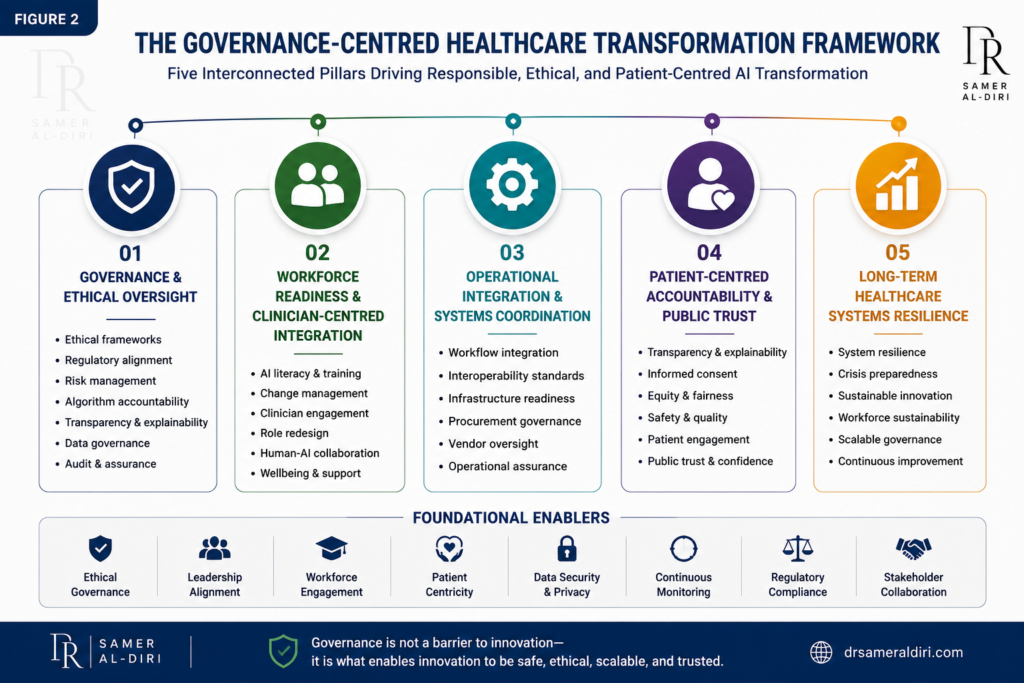
Figure 2. The Governance-Centred Healthcare Transformation Framework.
The Governance-Centred Healthcare Transformation Framework proposes five interconnected strategic pillars for responsible healthcare AI implementation. These pillars should be understood as mutually reinforcing system requirements rather than isolated administrative domains.
Weakness in one pillar frequently destabilises transformation across the broader healthcare system. Organisations that fail to align governance maturity with AI implementation may unintentionally accelerate operational fragmentation rather than sustainable healthcare transformation.
5.1 Governance and Ethical Oversight
Healthcare AI implementation requires transparent governance structures, multidisciplinary oversight, regulatory accountability, ethical review pathways, institutional leadership coordination, and clear escalation mechanisms capable of ensuring responsible innovation.
5.2 Workforce Readiness and Clinician-Centred Integration
Healthcare transformation should strengthen healthcare professionals rather than destabilise clinical workflows. Sustainable implementation depends on workforce readiness, digital literacy, governance literacy, implementation training, and clinician-centred operational redesign.
5.3 Operational Integration and Systems Coordination
Healthcare AI systems must integrate safely within operational workflows, interoperability standards, procurement governance structures, implementation review processes, and healthcare delivery pathways rather than functioning as isolated technological tools.
5.4 Patient-Centred Accountability and Public Trust
Future healthcare systems must preserve transparency, explainability, equity, safety, continuity of care, and public trust while ensuring healthcare AI remains accountable to patients and communities.
5.5 Long-Term Healthcare Systems Resilience
Sustainable healthcare transformation requires systems capable of maintaining operational resilience during workforce strain, public health emergencies, humanitarian crises, demographic change, and evolving healthcare demands.
6. Board and Executive Leadership Responsibilities
Healthcare AI governance should not be delegated solely to technical teams. It requires board-level and executive-level responsibility because AI systems can influence clinical quality, financial sustainability, workforce models, reputational risk, public trust, and legal or regulatory exposure.
Boards and executive leadership teams should establish clear accountability for AI strategy, risk appetite, procurement oversight, patient safety, workforce readiness, ethics, compliance, data governance, cybersecurity, operational performance, and public transparency.
| Leadership domain | Executive responsibility | Practical governance question |
|---|---|---|
| Strategy and value | Ensure AI supports organisational strategy, clinical priorities, patient-centred care, and health-system sustainability. | Does this AI initiative solve a real health-system problem or merely introduce new technology? |
| Risk oversight | Define risk appetite, safety thresholds, escalation pathways, incident review processes, and accountability structures. | What could go wrong clinically, operationally, ethically, financially, or reputationally? |
| Clinical accountability | Ensure AI supports rather than replaces accountable professional judgement. | Who remains clinically accountable when AI influences a decision? |
| Workforce readiness | Approve workforce preparation, training, engagement, change management, and workflow redesign plans. | Are clinicians prepared, involved, and supported before deployment? |
| Procurement governance | Require evidence review, validation standards, vendor due diligence, data protection, and lifecycle monitoring. | Has the vendor demonstrated safety, performance, transparency, and post-deployment accountability? |
| Equity and public trust | Require bias assessment, explainability, patient communication, and appeal mechanisms where AI affects access or prioritisation. | Could this system worsen inequity or reduce patient trust? |
| Performance monitoring | Maintain dashboards for safety, quality, efficiency, workforce impact, patient experience, and governance review. | How will we know whether the system is helping or harming over time? |
7. Healthcare AI Governance Maturity Model
The maturity model below provides a practical pathway for organisations to assess their current governance capability and progress toward resilient, enterprise-level, patient-accountable AI governance.
| Level | Maturity stage | Characteristics | Priority action |
|---|---|---|---|
| 1 | Awareness | AI interest exists, but governance structures, risk assessment, and workforce preparation are limited. | Create an AI governance steering group and map all existing or planned AI use cases. |
| 2 | Pilot Adoption | Small pilots are underway, but evaluation, documentation, procurement standards, and accountability mechanisms remain inconsistent. | Introduce standard approval, validation, audit, and reporting templates for every AI pilot. |
| 3 | Controlled Governance | Formal committees, policies, clinical oversight, data governance, and procurement controls are established for selected AI systems. | Embed workforce readiness, patient transparency, and equity assessment into deployment decisions. |
| 4 | Enterprise Integration | AI governance is integrated across clinical, operational, digital, procurement, legal, quality, and executive structures. | Create enterprise dashboards for safety, performance, workforce impact, and patient-centred accountability. |
| 5 | Resilient Governance Ecosystem | AI governance is adaptive, continuously monitored, publicly accountable, aligned with regulation, and connected to health-system resilience. | Publish periodic transparency reports and strengthen regional, academic, regulatory, and public health collaboration. |
8. Three Non-Negotiable Governance Red Lines for Healthcare AI
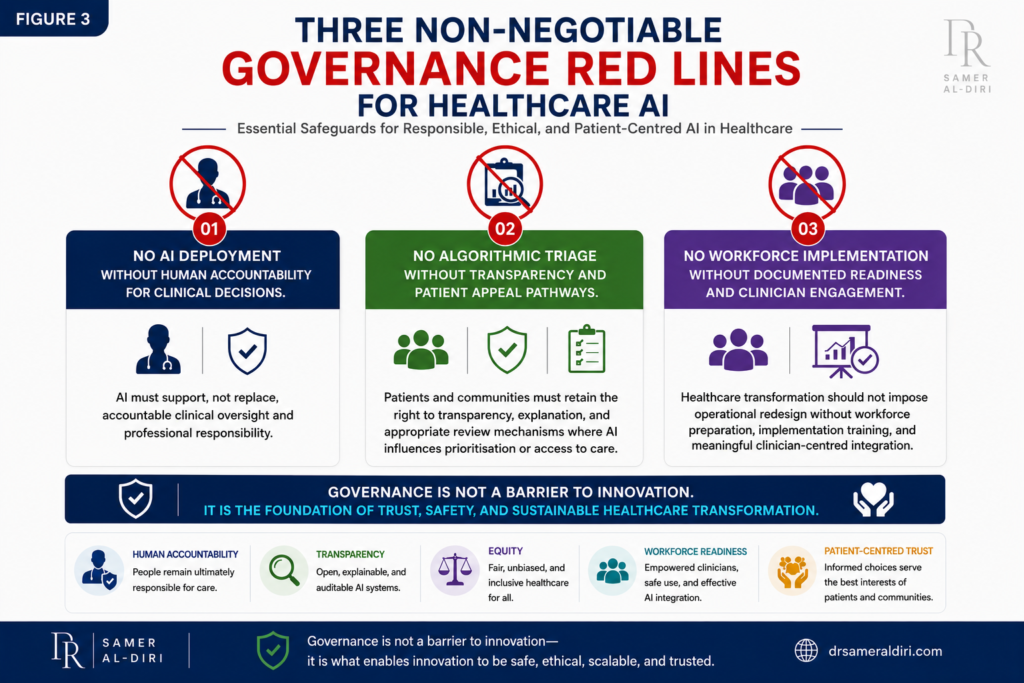
Figure 3. Three Non-Negotiable Governance Red Lines for Healthcare AI.
- No AI deployment without human accountability for clinical decisions. AI must support, not replace, accountable clinical judgement and professional responsibility.
- No algorithmic triage without transparency and patient appeal pathways. Patients and communities should retain the right to explanation, transparency, and appropriate review where AI influences prioritisation or access to care.
- No workforce implementation without documented readiness assessment and clinician engagement. Healthcare transformation should not impose operational redesign without preparation, training, and meaningful clinician-centred integration.
9. Governance KPI Dashboard for Responsible Healthcare AI
Governance maturity should be measurable. The following KPI dashboard provides practical indicators that healthcare executives can adapt for organisational monitoring, board reporting, and continuous improvement.
| Governance domain | Example KPI | Why it matters | Reporting frequency |
|---|---|---|---|
| Governance oversight | Percentage of AI tools reviewed by the AI governance committee before deployment | Confirms institutional oversight before implementation | Quarterly |
| Clinical accountability | Percentage of AI-assisted workflows with named clinical accountability owner | Maintains human accountability and professional responsibility | Quarterly |
| Validation and safety | Percentage of AI systems with documented validation before go-live | Reduces unsafe or poorly evidenced deployment | Before deployment; annual review |
| Algorithmic auditing | Number and frequency of bias, drift, and performance audits | Detects performance degradation and inequitable outputs | Quarterly or biannually |
| Workforce readiness | Percentage of affected staff trained before implementation | Reduces workflow disruption and clinician distrust | Before deployment; annually |
| Patient transparency | Percentage of patient-facing AI use cases with clear communication and explanation process | Protects trust, dignity, and informed engagement | Quarterly |
| Equity impact | Number of AI systems with equity impact assessment | Reduces risk of widening disparities | Before deployment; annual review |
| Data governance | Percentage of AI tools with documented data source, privacy, and cybersecurity review | Protects data integrity, privacy, and security | Before deployment; annual review |
| Incident response | Time from AI-related incident detection to escalation and review | Supports safety learning and rapid mitigation | Continuous |
| Operational value | Measured effect on waiting time, efficiency, quality, cost, or workload | Ensures AI produces meaningful health-system value | Quarterly |
| Patient experience | Patient feedback or trust score related to AI-enabled care pathways | Maintains patient-centred accountability | Biannually |
| Board reporting | Frequency of AI governance performance reports to executive leadership or board | Ensures senior accountability and strategic oversight | Quarterly |
10. Healthcare AI Governance as a Strategic Leadership Responsibility
Healthcare AI governance is fundamentally a strategic healthcare leadership, operational management, and institutional accountability responsibility. It should not be viewed as a narrow technical discipline.
AI systems increasingly influence diagnostics, clinical prioritisation, operational management, workforce allocation, risk prediction, public health surveillance, and healthcare decision support. Without governance-centred implementation strategies, healthcare systems may unintentionally amplify algorithmic bias, inequity, operational fragmentation, accountability gaps, clinician distrust, and erosion of public confidence.
Future-ready healthcare organisations will increasingly require AI governance committees, algorithmic auditing pathways, procurement governance frameworks, clinical accountability structures, implementation review mechanisms, and operational escalation protocols. Governance enables innovation to remain scalable, sustainable, clinically responsible, and publicly trusted.
11. Workforce Readiness Is Essential to Sustainable Healthcare Systems
One of the greatest misconceptions in modern healthcare transformation is the assumption that technology alone can compensate for workforce strain. Healthcare systems remain fundamentally human systems.
Regardless of technological sophistication, healthcare delivery continues to depend on clinical judgement, interdisciplinary communication, contextual decision-making, ethical reasoning, empathy, and human accountability.
Healthcare leaders must prioritise workforce-centred transformation strategies that integrate digital literacy, governance literacy, AI awareness, implementation training, interdisciplinary collaboration, operational redesign, and long-term workforce sustainability planning.
This is particularly important in low-resource and humanitarian healthcare environments, where governance-centred transformation must balance technological adoption with infrastructure limitations, accessibility challenges, workforce shortages, financing constraints, and long-term health-system resilience.
12. Patient-Centred Accountability Must Remain the Defining Principle
The future credibility of healthcare AI will ultimately depend on whether healthcare systems preserve patient-centred accountability. Patients are not operational variables or data sources; they are individuals whose healthcare experiences depend on trust, dignity, transparency, continuity, safety, equity, accessibility, and ethical healthcare delivery.
Poorly governed healthcare AI systems may weaken public trust if organisations fail to ensure explainability, accountability, fairness, transparency, and responsible institutional oversight. Technology should support healthcare relationships, not replace them.
13. Phased Implementation for Health Systems
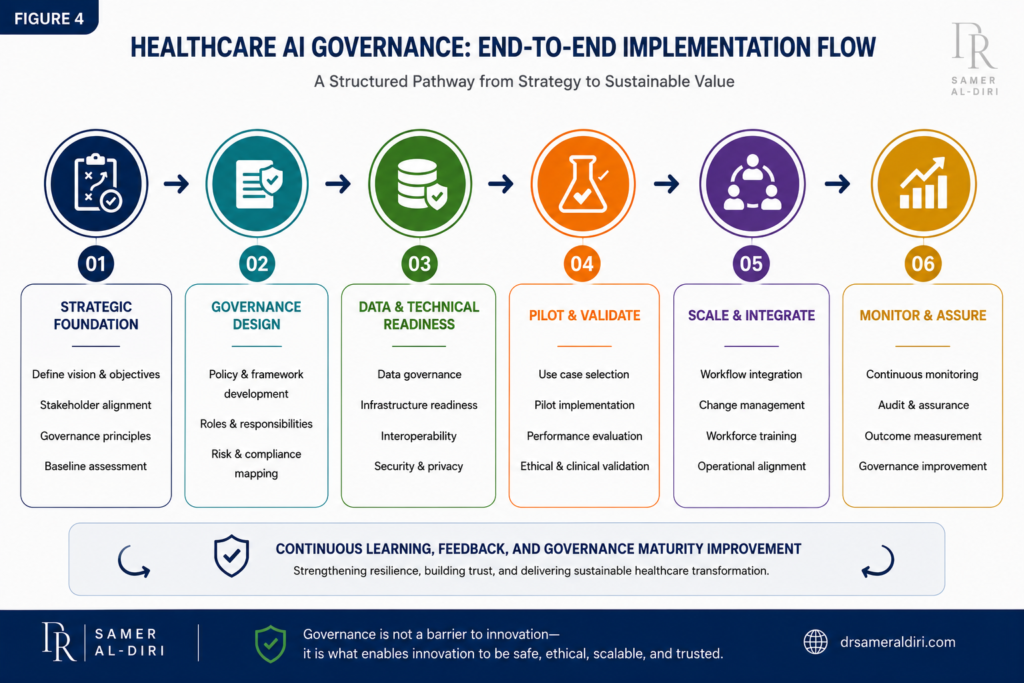
Figure 4. Healthcare AI Governance – End-to-End Implementation Flowchart.
Phase 1: Assess and Prepare (0-6 months)
- Establish multidisciplinary AI governance councils.
- Map all AI use cases, risks, owners, vendors, and affected workflows.
- Develop procurement governance standards and minimum evidence requirements.
- Assess workforce readiness, digital literacy, data maturity, and infrastructure readiness.
- Define ethical oversight, clinical accountability, consent, transparency, and escalation structures.
Phase 2: Design and Pilot (6-18 months)
- Launch limited-scope AI pilots with embedded audit trails.
- Integrate clinician feedback mechanisms and operational review processes.
- Establish patient communication, transparency, and appeal pathways where relevant.
- Monitor interoperability, workflow integration, equity impact, patient experience, and operational outcomes.
- Evaluate pilots before scaling, including safety, workforce impact, patient-centred outcomes, and value.
Phase 3: Integrate and Scale (18-36 months)
- Scale governance-centred AI integration across selected clinical and operational domains.
- Conduct ongoing algorithmic auditing, equity assessment, model drift monitoring, and performance review.
- Maintain workforce adaptation, training refreshers, and governance review processes.
- Strengthen data governance, cybersecurity, procurement oversight, and incident response structures.
- Publish institutional accountability, transparency, and learning reports where appropriate.
Phase 4: Optimise, Assure, Sustain and Evolve (36 months and beyond)
- Continuously improve AI governance using real-world evidence and stakeholder feedback.
- Review all AI systems against evolving regulatory, ethical, clinical, and public expectations.
- Share lessons across health systems, academic networks, professional bodies, and public health institutions.
- Sustain resilient, adaptive, patient-accountable AI governance as part of wider health-system transformation.
14. Executive Policy Brief
Five strategic recommendations for health-system leaders, policymakers, regulators, and healthcare institutions:
- Establish healthcare AI governance as a formal institutional priority. AI oversight should sit within board and executive governance structures, not only within digital or IT departments.
- Require human accountability and patient-centred transparency in every clinically relevant AI workflow. Patients and clinicians should understand when AI is used, how it influences care, and who remains accountable.
- Build workforce readiness before scaling AI. Digital literacy, governance literacy, clinical engagement, and operational redesign should be mandatory before implementation.
- Measure governance maturity using a practical KPI dashboard. Safety, equity, drift, explainability, training, patient trust, and operational value should be monitored continuously.
- Align healthcare AI with long-term systems resilience. AI should support sustainable, equitable, accessible, and patient-centred health systems rather than adding complexity to already strained healthcare environments.
15. Key Terminology Registry
| Term | Definition |
|---|---|
| Healthcare AI governance | The institutional system of oversight, accountability, ethics, risk management, clinical responsibility, data governance, and performance monitoring that guides AI implementation in healthcare. |
| Governance maturity | The organisational capability to oversee AI through ethical, operational, regulatory, safety, and accountability structures before and during implementation. |
| Workforce readiness | The extent to which healthcare professionals are prepared digitally, ethically, operationally, and strategically to work safely within AI-enabled healthcare systems. |
| Patient-centred accountability | The principle that AI systems should preserve transparency, explainability, contestability, trust, dignity, safety, equity, and continuity of care for patients and communities. |
| Human-in-the-loop oversight | A governance approach in which appropriately trained humans retain meaningful oversight, responsibility, and escalation authority over AI-influenced decisions. |
| Algorithmic accountability | The obligation to document, validate, monitor, explain, audit, and correct AI systems that influence healthcare decisions, operations, or access. |
| Explainability | The ability to provide understandable information about how an AI system contributes to outputs, recommendations, prioritisation, or decisions. |
| Model drift | A decline or change in AI performance over time because real-world data, populations, clinical pathways, or operating conditions differ from the original development environment. |
| Governance-centred transformation | A healthcare transformation approach that prioritises institutional oversight, workforce integration, operational sustainability, patient accountability, and systems resilience alongside technological innovation. |
16. Questions and Answers
Can AI improve healthcare without governance?
AI may improve technical efficiency, but sustainable healthcare transformation requires governance frameworks capable of ensuring accountability, transparency, operational safety, workforce integration, equity, and ethical implementation.
Why do many healthcare transformation projects fail?
Common causes include fragmented implementation, weak governance oversight, inadequate workforce readiness, operational misalignment, insufficient leadership coordination, limited interoperability, and poor patient engagement.
Will AI replace physicians and healthcare professionals?
AI will likely augment healthcare workflows and decision support, but healthcare systems will continue to depend on human judgement, communication, empathy, ethical reasoning, contextual expertise, and professional accountability.
What is workforce readiness in healthcare AI?
Workforce readiness refers to preparing healthcare professionals operationally, ethically, digitally, and strategically to function effectively within governance-centred and AI-enabled healthcare systems.
Why is patient-centred accountability essential?
Healthcare innovation must preserve trust, transparency, equity, continuity of care, safety, and ethical responsibility while ensuring technology remains accountable to patients and communities.
What is the greatest risk of poorly governed healthcare AI?
Poor governance may increase algorithmic bias, operational fragmentation, clinician distrust, inequity, workforce instability, safety risks, and erosion of public confidence in healthcare systems.
What should healthcare boards ask before approving AI deployment?
They should ask whether the AI system is clinically justified, evidence-based, safe, validated, accountable, explainable, equitable, workforce-ready, legally compliant, operationally integrated, and continuously monitored.
17. Conclusion
Healthcare systems worldwide are entering a transformational era shaped by technological acceleration, operational complexity, demographic change, workforce pressures, humanitarian instability, and evolving patient expectations.
AI will influence the future of healthcare delivery, diagnostics, operational management, public health systems, and healthcare decision-making. However, the long-term success of healthcare transformation will not be determined by technological sophistication alone.
It will be determined by whether health systems can build governance maturity, institutional leadership, workforce readiness, operational resilience, ethical accountability, public trust, and patient-centred healthcare systems capable of sustaining equitable and resilient healthcare delivery.
Technology may accelerate healthcare transformation. But sustainable healthcare transformation remains fundamentally a governance, leadership, workforce, and systems resilience challenge.
Healthcare organisations that embrace governance-centred healthcare transformation will be better positioned to build resilient, scalable, ethically grounded, operationally sustainable, and patient-accountable healthcare systems prepared for the future.
Selected Strategic References and Global Guidance
- World Health Organization. Ethics and governance of artificial intelligence for health: WHO guidance. 2021. https://www.who.int/publications/i/item/9789240029200
- World Health Organization. Regulatory considerations on artificial intelligence for health. 2023. https://www.who.int/publications/i/item/9789240078871
- World Health Organization. Ethics and governance of artificial intelligence for health: guidance on large multi-modal models. 2024/2025.
- https://www.who.int/publications/i/item/9789240084759
- European Union. Regulation (EU) 2024/1689 laying down harmonised rules on artificial intelligence (AI Act). European Commission AI Act overview. https://digital-strategy.ec.europa.eu/en/policies/regulatory-framework-ai
- European Commission. Artificial intelligence in healthcare – EU Public Health. https://health.ec.europa.eu/ehealth-digital-health-and-care/artificial-intelligence-healthcare_en
- U.S. Food and Drug Administration. Artificial Intelligence in Software as a Medical Device. https://www.fda.gov/medical-devices/software-medical-device-samd/artificial-intelligence-software-medical-device
- U.S. Food and Drug Administration. Artificial Intelligence/Machine Learning (AI/ML)-Based Software as a Medical Device Action Plan. 2021.
- Nature Medicine. Artificial intelligence in medicine and health systems research collections.
- NEJM AI. Healthcare artificial intelligence, governance, safety, and clinical implementation research.
- The Lancet Digital Health. Digital health, AI, implementation, equity, and health-system transformation research.
- BMJ Health & Care Informatics and BMJ Digital Health. Healthcare AI, clinical safety, ethics, and governance literature.
- Organisation for Economic Co-operation and Development. OECD AI Principles and AI policy guidance.
- National Academy of Medicine. Artificial intelligence, health, ethics, and learning health systems publications.
- London School of Hygiene & Tropical Medicine. Global health systems strengthening and health-system resilience research.
- Johns Hopkins University. Health systems, public health, implementation science, and AI in healthcare research.
Disclaimer, Citation, Copyright and Licensing
Suggested Citation
Al-Diri S. Healthcare AI Governance: The Governance-Centred Healthcare Transformation Framework for Institutional Leadership, Workforce Readiness, Patient-Centred Accountability, and Health-System Resilience. Executive Edition, Version 2.0. Dr. Samer Al-Diri; June 2026. Available at: https://drsameraldiri.com
Copyright and Licensing
Copyright © 2026 Dr. Samer Al-Diri.
This publication is licensed under the Creative Commons Attribution–NonCommercial–NoDerivatives 4.0 International License (CC BY-NC-ND 4.0).
You are free to share, copy, download, and redistribute this publication in any medium or format for non-commercial purposes, provided that appropriate credit is given to the author, a reference to the original publication is maintained, and the material is not modified, adapted, translated, or redistributed in altered form.
Commercial use, republication for commercial purposes, and distribution of modified or derivative versions are not permitted without prior written permission from the author.
Licence details:
https://creativecommons.org/licenses/by-nc-nd/4.0/
For permissions beyond the scope of this licence, please contact the author through:
https://drsameraldiri.com
Competing Interests and Funding
The author declares no competing financial, commercial, professional, or personal interests that could have influenced the content, interpretation, or conclusions presented in this publication.
No external funding was received for the preparation of this publication.
This article is intended for professional education, healthcare leadership discussion, health-system strategy, governance planning, and public health communication. It does not provide legal, regulatory, procurement, or individual clinical advice. Healthcare organisations should seek qualified legal, regulatory, clinical governance, data protection, and technical expertise before deploying AI systems in clinical or operational settings.