

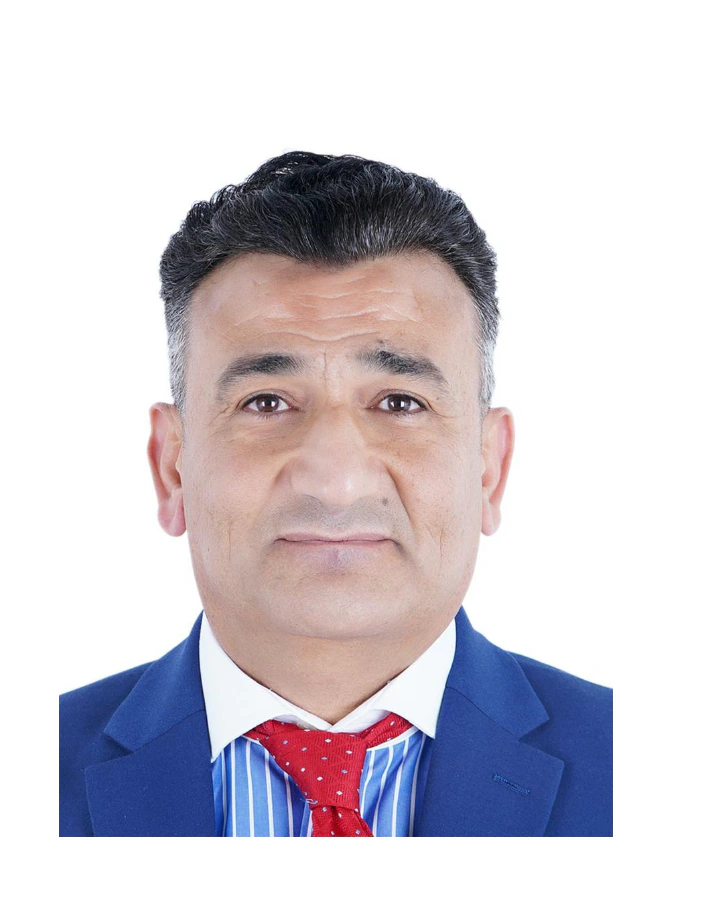
Dr. Samer Al-Diri, MD, MSc, MPH, is a UK-trained ophthalmologist, public-health professional and strategic healthcare consultant based in the United Arab Emirates. His work connects clinical practice with healthcare management, population health and the practical challenge of improving how services are governed, organised and delivered.
He is an International Associate of the American College of Healthcare Executives (ACHE).
That combination of perspectives shapes a professional focus on health-system strategy, service transformation, clinical governance, prevention and responsible innovation. Rather than treating these as separate disciplines, Dr. Al-Diri approaches them as parts of the same task: translating evidence and strategic intent into safer patient pathways, stronger organisational accountability, better-prepared workforces and services that can be sustained in real operating conditions.
From clinical medicine to system leadership
Dr. Al-Diri’s clinical foundation is in ophthalmology, including retina and the pathways surrounding eye disease. Ophthalmology makes the consequences of system design particularly visible. Timely detection, the quality of referral, access to appropriate assessment and treatment, continuity of follow-up and patient understanding can determine whether sight is protected or avoidable harm occurs. These clinical realities have informed his wider interest in prevention, early intervention and the relationship between population need and service capacity.
They have also reinforced a central principle in his work: clinical quality depends on more than individual expertise. It requires clear governance, reliable processes, appropriately trained teams and coordination across organisational boundaries. A technically sound intervention can still fail when referral criteria are unclear, information does not move with the patient, responsibilities are fragmented or services are not designed around demand. This is why Dr. Al-Diri’s clinical background and health-system work remain closely connected.
Between 2005 and 2016, he worked as a Specialist Physician and Ophthalmologist across various UK hospitals through GUT UK Medical Services. This period provided practical experience of different clinical settings and service arrangements within UK healthcare. It also strengthened his understanding of how standards, team structures, referral pathways and operational capacity influence the consistency and safety of care.
Healthcare management and transformation
Since 2020, Dr. Al-Diri has served at the Sharjah Consultancy Centre for Modern Medical Care as Director of Healthcare Services / Strategic Healthcare Consultant. His work is concerned with healthcare management, service planning and the conversion of strategy into workable operating models. The emphasis is not transformation for its own sake, but improvement that is clinically credible, measurable and capable of being maintained.
This includes considering how governance, workforce capability, service design and implementation discipline interact. Effective transformation requires more than a policy statement or a new technology. It requires defined accountability, realistic sequencing, appropriate measures and sustained engagement with the people responsible for delivery. Dr. Al-Diri’s professional philosophy is therefore grounded in practical implementation: evidence must be interpreted for context, strategy must be expressed through clear decisions, and change must be tested against patient safety, equity and operational reality.
Clinical governance is central to that approach. Strong governance should help organisations identify risk early, learn from performance, clarify responsibility and create conditions in which professionals can deliver safe care. Service development should similarly begin with a clear understanding of patient need, existing capacity and the points at which pathways break down. By connecting these elements, organisations can move from isolated projects towards coherent improvement.
Public health, prevention and resilient systems
Dr. Al-Diri holds an MPH from City, University of London and an MSc Health Science from University College London, alongside his MD from Damascus University. His public-health perspective broadens the clinical question from how an individual patient is treated to how services anticipate need, reduce preventable harm and distribute capacity fairly.
In parallel with his other professional work, from 2018 to 2023 Dr. Al-Diri served as Strategic Health Systems & Public Health Adviser to SCAN UK, contributing to healthcare management, governance, service resilience and programme planning in a humanitarian and conflict-affected context.
Resilient health systems must be able to maintain essential functions while responding to pressure and uncertainty. That depends on preparedness, credible governance, workforce readiness and service models that can adjust without losing sight of quality or equity. In both routine and humanitarian contexts, prevention and integrated care are important because they reduce fragmentation and help systems act earlier rather than concentrating resources only at the point of crisis.
Integrated care, in this view, is not simply a structural label. It is a practical commitment to better coordination among professionals, services and levels of care. It requires shared objectives, usable information, clear referral and escalation routes, and accountability for the patient’s journey rather than for one isolated episode. These principles are especially relevant to eye health, where screening, early detection, specialist review and long-term follow-up often depend on several parts of the system working together.
Responsible digital health
Digital health and artificial intelligence can support better decisions, more consistent pathways and improved access, but technology does not remove the need for governance. Dr. Al-Diri approaches digital transformation as an organisational and clinical responsibility as well as a technical opportunity. Adoption should be guided by patient safety, accountability, equity, workforce capability and evidence of appropriate use.
Responsible implementation therefore requires clarity about purpose, limitations, oversight and the human decisions that surround a tool. It also requires attention to workflow: even a promising technology can add risk if it is introduced without appropriate training, escalation arrangements, monitoring or integration with existing services. Sustainable innovation is achieved when technology strengthens care delivery and institutional capability rather than becoming a disconnected initiative.
Publications and professional commentary
Dr. Al-Diri publishes evidence-informed analysis on healthcare strategy, health-system resilience, clinical governance, prevention, responsible digital health and eye health. The purpose of this work is to examine practical problems, connect evidence with implementation and contribute clear professional commentary for healthcare leaders, clinicians and others involved in service improvement.
His publications are evidence-informed professional analyses intended to connect evidence, governance and implementation. They identify the delivery questions behind a topic, explain why they matter and consider how evidence can inform practical action.
Selected publications by Dr. Samer Al-Diri
- Integrated Care Is Strategy: The Executive Operating Model for High-Performance Health Systems
- Building Resilient Health Systems: A Healthcare Management Framework
- Amblyopia as a Preventable Public Health Failure: Childhood Vision Screening, AI-Enabled Pathways, and the Future of Preventive Eye Care
Across his clinical, advisory and management work, Dr. Al-Diri’s aim is consistent: to help turn evidence and strategy into governance that works, safer patient pathways, better-prepared teams and services that remain effective under pressure. His professional interests meet at the point where patient care, population health and organisational responsibility become one practical agenda.